GraspIt

/ˈɡrɑːsp ɪt/ verb

to stop meeting the same word for the sixth time and still not knowing what it means.

by selecting it anywhere on your phone, understanding it on the spot, and being handed it again just before it goes.

You are three paragraphs into something good when you hit . The sentence around it gives you the gist, so you read on. By morning the word is gone, and the next time it turns up it is just as new.

Select the word

That is the sixth time petrichor has done this to you. GraspIt is how it stops: the word is kept the moment you look it up, and handed back a day later, then a week later, until it is simply a word you know. Looking it up takes nothing — GraspIt is already in the menu that comes up when you select text, in the browser, in a reader, in a chat.

Coming soon to Android

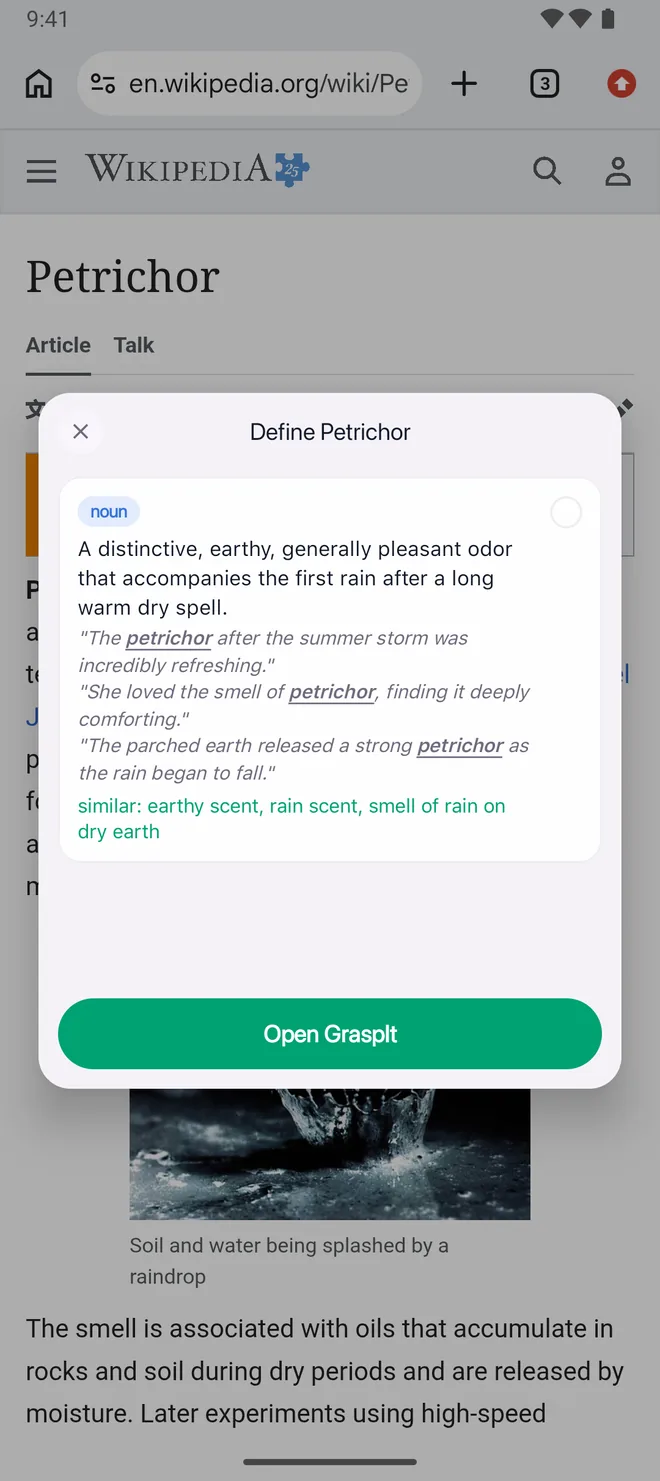
A Wikipedia article on a phone with GraspIt open over it, defining petrichor as a distinctive, earthy odour that accompanies the first rain after a long warm dry spell, with example sentences and near-words, and a control to keep it.
petrichor, on the page where it turned up

to reach a word without leaving the thing you were reading.

GraspIt registers itself in Android's text selection menu, so it is waiting wherever the word actually is. Nothing to copy, no app to switch to, and the article keeps your place underneath.

she selected the word in the middle of a paragraph and never lost the paragraph
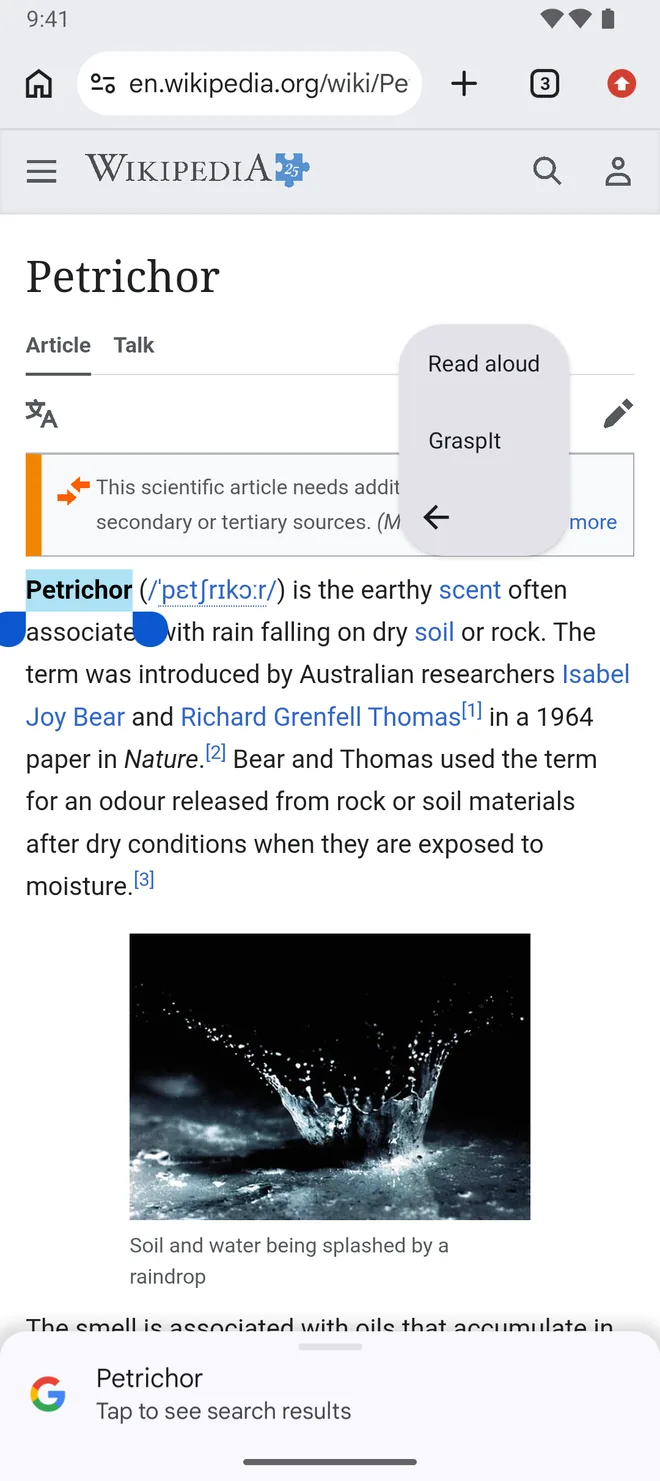
Text selected in a mobile browser. The selection menu is open and GraspIt sits in it, below Read aloud.

to keep the word, not just the moment.

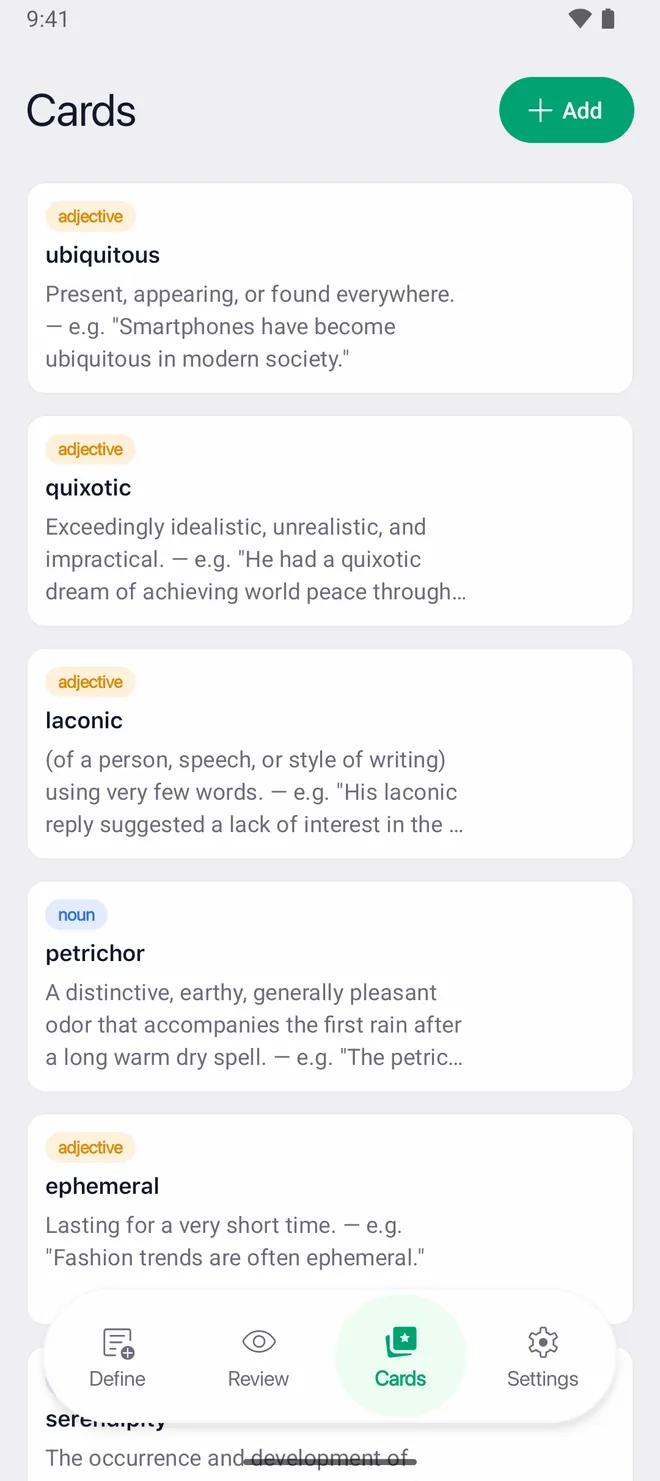
Each word you look up becomes a card that holds the sense you chose, its pronunciation and the examples that made it land. Tag the ones that belong together and the deck stays yours to sort.

a deck of the words he kept meeting and never quite learning

The Cards screen listing saved words — ubiquitous, quixotic, laconic, petrichor and ephemeral — each with its part of speech and definition.

to meet a word again just before you would have forgotten it.

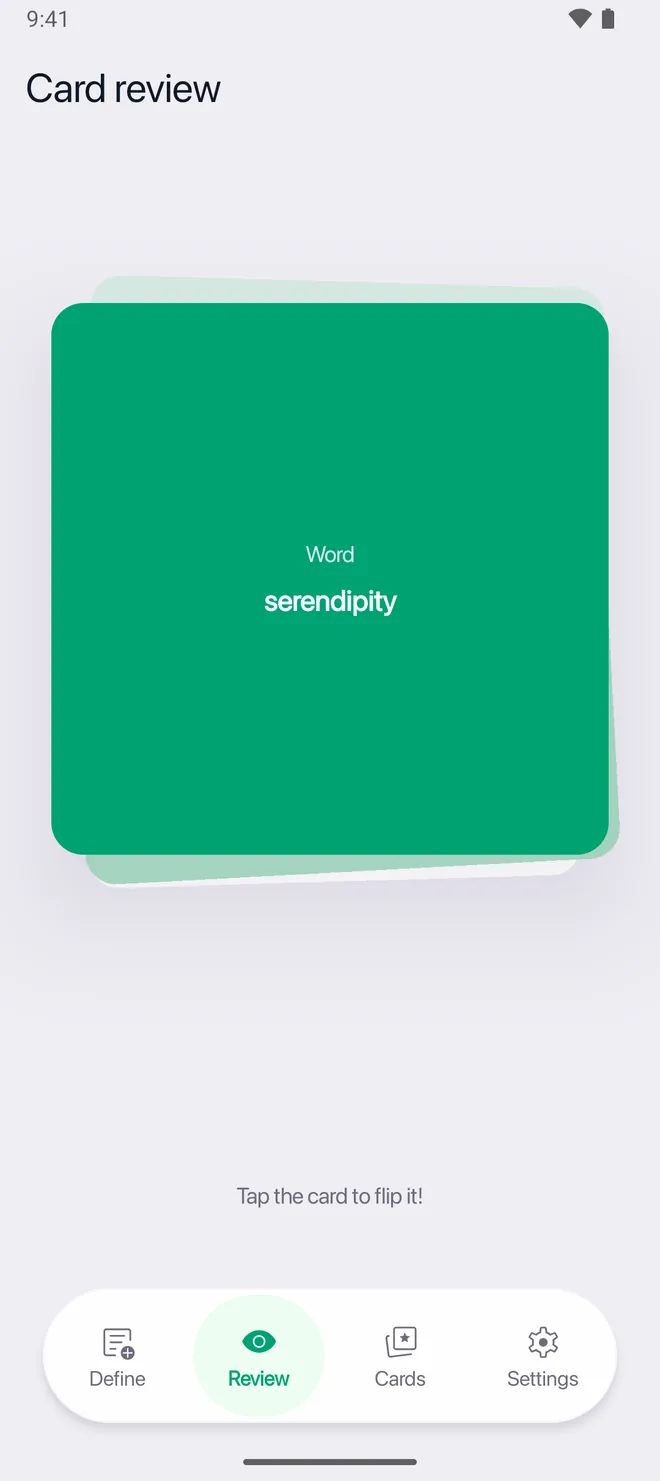
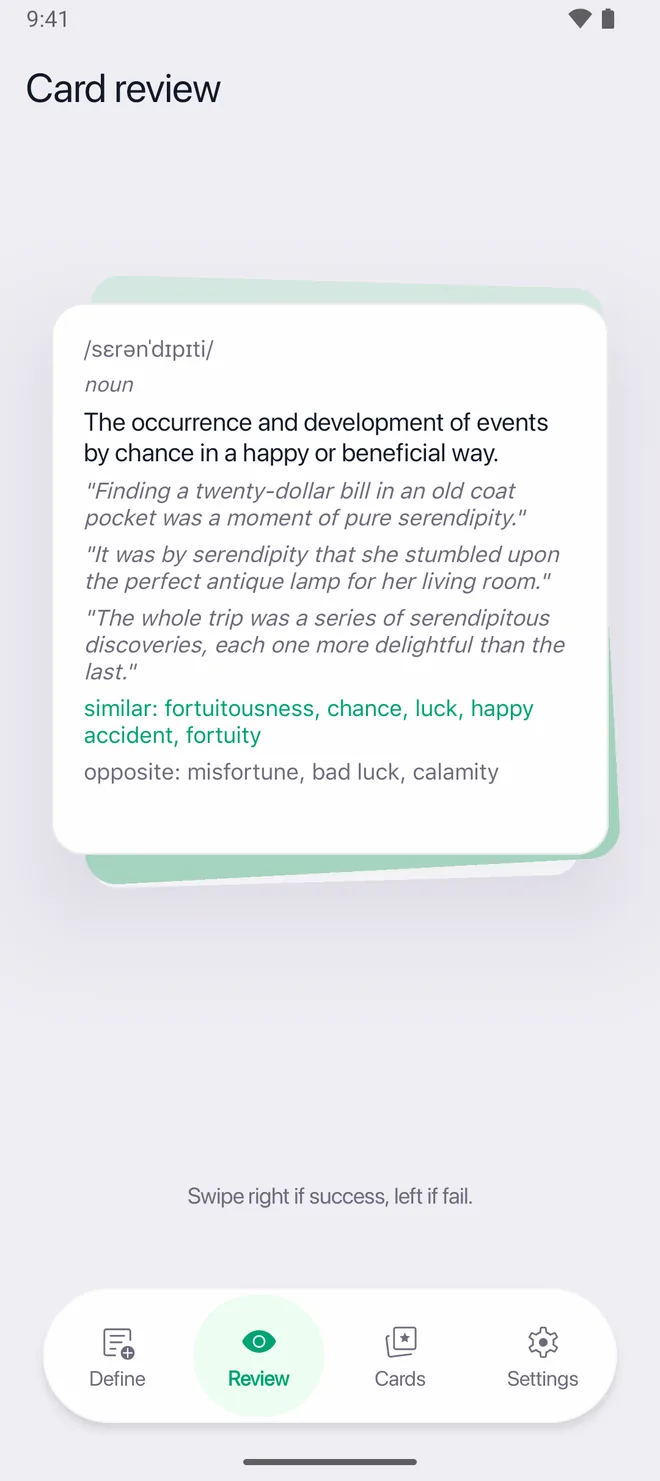
Cards come back on a schedule that follows how you did last time. Tap to turn one over, swipe right if you knew it, left if you didn't, and the next date moves accordingly.

serendipity came back on the fourth day, and that time it stayed

A review card face up, showing only the word serendipity on a green card, with the rest of the deck stacked behind it.
The same card turned over, showing the pronunciation, the definition, three example sentences and near-words.

to look one up on purpose.

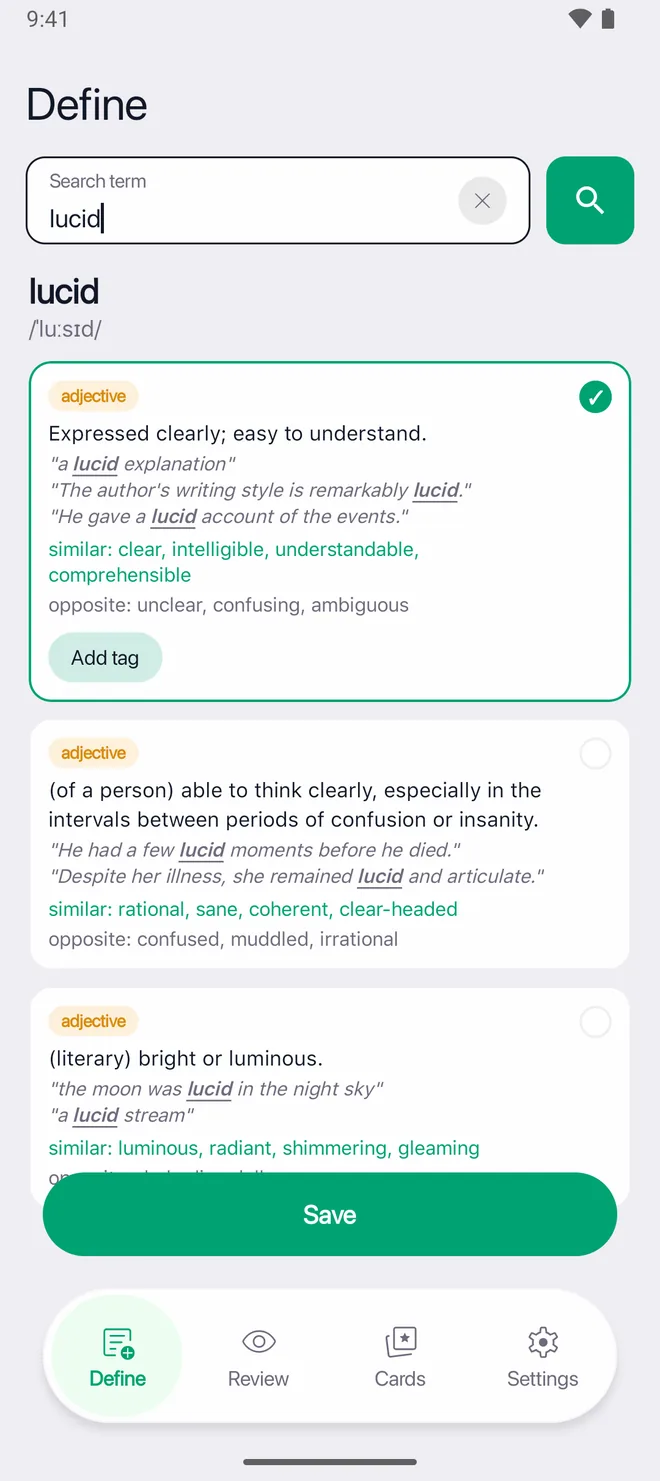
Search a word and every sense comes back separately, each with its own examples and near-words. Pick the sense you actually met — that is the one that becomes the card, so the card matches the sentence you found it in.

lucid has three senses, and only one of them was the one she wanted

The Define screen after searching lucid, listing three adjective senses. The first is selected and offers a tag, with Save at the bottom.